Stair Nosings for Safety and Durability
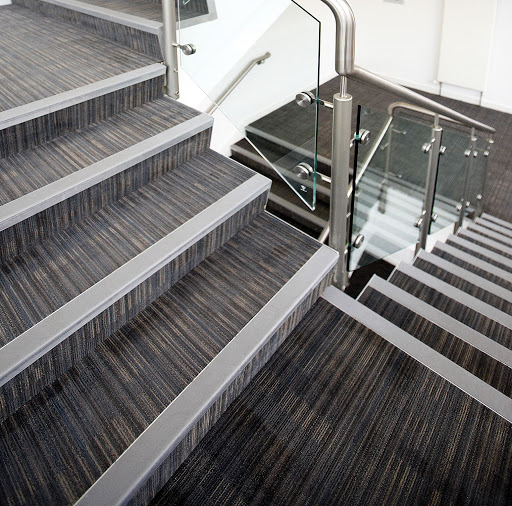
Stair nosings play a vital role in clearly defining step edges, enhancing both safety and visual guidance for users. In addition to improving visibility, they help protect the edges of floor coverings from wear and tear, significantly extending their lifespan and reducing the risk of trip hazards caused by damage or deterioration.We offer a comprehensive range of stair nosings, including bullnose, square, rake back and kinked face profiles. Explore the range to find the ideal solution for your stair design and safety requirements.
Shape of Step
Select the correct stair nosing for the shape of the step - this should be a tight fit to the step to ensure that the profile does not lift or rock during use, but instead provides a secure and stable fit. There are four main stair nosing shapes to choose from (see below). Kinked face profiles can be used on square and some rake back stairs.
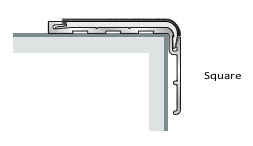
Square Edge Profile
Designed for steps with a sharp 90 degree edge.
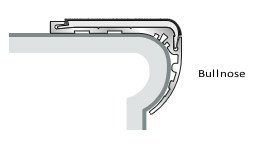
Bullnose Profile
Features a rounded front edge and is best suited for steps with a curved or radius edge.
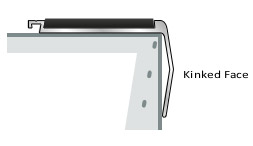
Rake Back Profile
Intended for stairs with a backward sloping riser. This profile ensures a snug fit where the vertical face of the step is angled rather than straight.
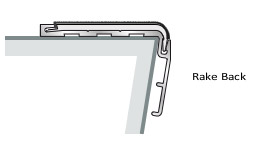
Kinked Face Profile
Engineered for use on square steps and select rake back stairs. The kinked design allows the nosing to accommodate subtle changes in step geometry while maintaining stability and flush alignment.
Once you have selected the correct shape to fit your stairs, you need to consider the gauge.
The stair nosing gauge, should be selected to sit flush with the finished flooring covering to prevent any trip hazards. When used with soft floor coverings like carpet or carpet tiles, the gauge should achieve a flush finish with the compressed thickness of the floor covering.
There are a range of gauges to suit the majority of commercial floor coverings.
As an example:
Stair Nosing Gauge Guide
Gauge |
Typically used with |
Ramp
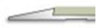 |
No floor covering / resilient floor coverings - Install profile on top of the floor covering for a secure, safe fit. |
|
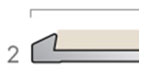
2mm – 3mm
|
Resilient floor coverings, including LVT.
|
|
4mm – 5mm

|
Carpet / Carpet Tile / LVT / Resilient floor coverings with bevelled underlay - in heavy use areas.
|
|
6mm

|
Carpet or Carpet Tile
|
|
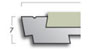
7mm – 10mm
|
Carpet / Wood / Ceramics / other heavy-duty floor coverings.
|
|
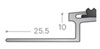
10mm – 15mm
|
Ceramics/ Stone/ Marble.
|
Stair Nosing - Fixing Method
A secure fixing between the stair edging and the step is essential to ensuring a safe installation. The stair edging profile and insert, type and condition of the substrate and the application will affect the type of fixing method required.
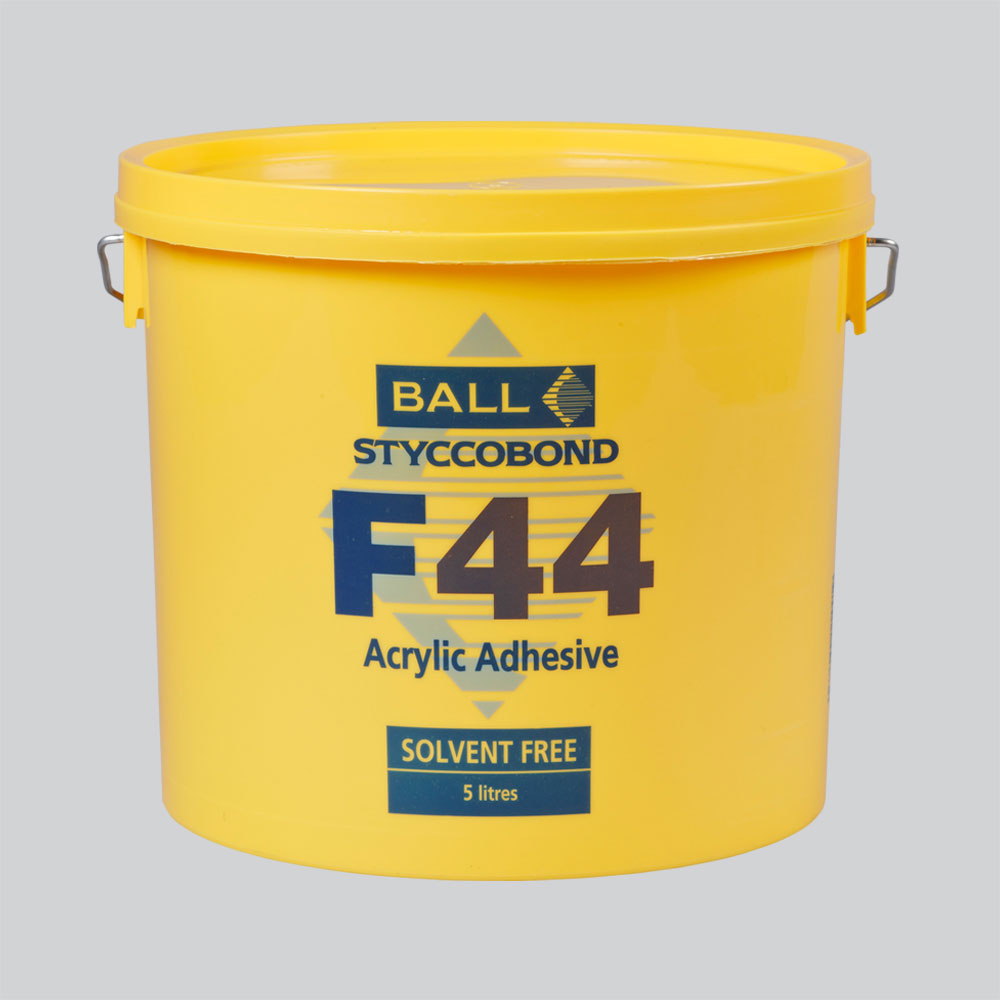
Adhesive only fixing - Gradus Grip. A specialist adhesive designed to securely bond stair edgings, eliminating the need for screws and screw head cover plugs, providing a neater finish. The Gradus Grip adhesive bond is available with a 10 year warranty.
Mechanical and adhesive fixing. A combination of screw fixings, cartridge adhesive and screw head cover plugs are used to achieve a secure fixing.
To ensure the correct installation method is selected further information can be found by visiting www.gradus.com and viewing their installation instructions
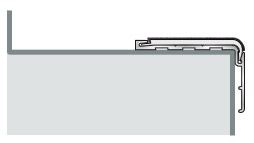
Single Channel Stair Nosings
Single channel -for use on treads up to 300mm deep
Wide and Double Channel Stair Nosings
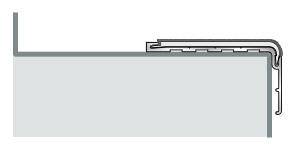
Wide and double insert stair nosings are suitable for stairs with large treads, especially if they are subject to heavy foot traffic e.g. railway stations, supermarkets, department stores, secondary and further education establishments and major hospitals.
When ordering a profile which has a double channel, both inserts will be of the same colour but must be of a contrasting colour to the surrounding floor finish - see Visual and Tonal Contrast section below.
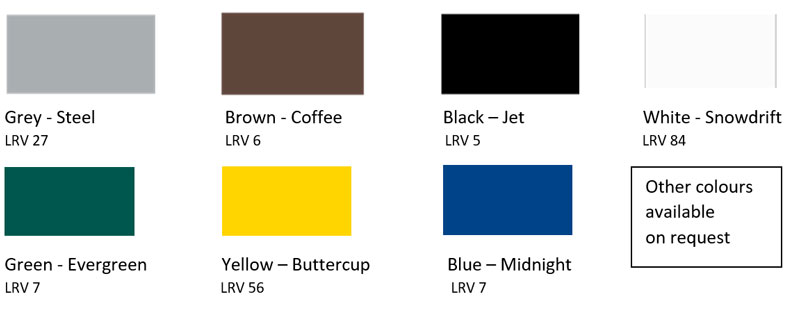
Except the PR, PK and PM flexible PVC nosings which are supplied in black, the nosings we supply all have an aluminium channel with a colour insert:
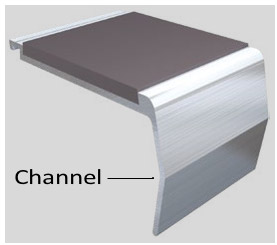
We can offer XT PVC-u Hardnose nosings. These are not shown on our website, so please contact us directly on 0333 577 5600 or send an email to info@safetyflooring.uk.com for a price.
Selecting the nosing insert
The inserts on our website are standard interior PVC inserts, designed for use in dry environments where stair surfaces are not exposed to moisture, and there is no risk of becoming wet through walked in moisture and spillages.
For enhanced safety in areas where the stair nosing may become wet - such as staircases near entrances or installations with safety flooring - we can supply Xtra-Grip inserts at an additional cost. These inserts feature increased surface roughness and are well suited for environments where slip resistance is critical, including schools, hospitals and back of house in commercial environments.
We also offer the new metal castellated inserts (available at additional cost) for the XT range. These inserts are ideal for luxury hospitality and prestigious residential applications. The metal insert is available in bronze or aluminium alloy.
In addition, we can supply a range of alternative channel finishes upon request, such as polished bronze, antique bronze and black anodised. Not all finishes are available for every profile. Minimum order quantities may apply depending on the profile and are subject to higher pricing.
For pricing or to discuss availability of Xtra-Grip inserts, metal castellated inserts, or special channel finishes, please contact us on 0333 577 5600 or info@safetyflooring.uk.com before placing an order on our website. All stair nosings with the exception of PK, PM and PR are made to order. Once production has started, we are unlikely to be able to amend this.
Visual and Tonal Contrast
Current building regulations highlight the need to ensure there is sufficient visual contrast at the step edge, providing a safe environment for all building users.
It is important to achieve a tonal contrast between the floor covering and the stair nosing as people with visual impairments may not be able to see some or all colours but can perceive light and dark.
Project Rainbow and ADM recommend that there is at least a 30 point difference between the LRVs (light reflective value) of the stair nosing and floor covering to achieve a suitable contrast.
If you want to read more, Gradus has a fantastic brochure which can be accessed via https://www.gradus.com/files/webfm/uploaded/PDF_Brochure/Stair_Edgings_Floor_Trims.pdf